
Knox 72-Hour Release Feed Status
No official rolling 72-hour released-person view was found in Knox County's web navigation. The official roster page points to the sheriff's mobile app, and the app's published description promises Inmate Search rather than a three-day release archive. Window, fields, update cadence, retention, and photo coverage are not published.
This gap should remain visible. A list of recent bookings would show people entering custody, not leaving it. A private list can be stale, misidentified, or retained after release. Neither can be republished as an official Knox County release feed.
Build a Knox Three-Day Window
A bounded request is the most reliable way to reconstruct the period. Choose an exact opening timestamp and closing timestamp instead of saying “the last three days.” That protects against ambiguity at midnight and lets the sheriff identify the existing records sought.
- Write the start and end date, time, and time zone for the full 72-hour interval.
- Ask the Knox County Sheriff for existing release-log rows whose release timestamp falls in that interval.
- Request booking number, release time, release code or type, code legend, and destination or receiving agency where recorded and releasable.
- Match a person to the Knox court docket using stable identifiers and the correct case number.
- When a transfer appears, confirm the next episode through IDOC, another county, USMS/BOP, or ICE as the record directs.
Do not ask the sheriff to create an analysis that does not exist. Illinois FOIA generally requires production of records, not new research. An export of existing fields may be available even though no public web list is maintained.
Knox 72-Hour Release Fields
The requested fields should distinguish the custody episode from the reason and destination. Not every record will expose every field, and lawful exemptions may require redaction. A coded result should be read with the custodian's legend.
| Field | How to read it |
|---|---|
| Booking number | Links the row to one Knox jail stay. |
| Booking timestamp | Shows when that custody episode began, not when release occurred. |
| Release timestamp | Places the end of sheriff custody inside the requested window. |
| Release code or manner | May identify bond, court order, time served, completion, or transfer. |
| Releasing authority | Identifies the recorded basis or office where maintained. |
| Destination or receiver | Helps distinguish community release from another custodian. |
A sheriff record marked transfer confirms an end to county custody and a movement onward. Keep the word “transfer” in any summary. Do not collapse it into a broad claim that the person was free.
Weekend Knox Release Timing
A 72-hour interval is useful around weekends and holidays because legal authority, physical processing, and a notification can occur at different times. A judge's order may be entered before the jail processes the exit. VINE may send its event after a source update. IDOC can admit a transferred person after the sheriff closes the county booking.
Knox County has not published a routine weekend-release procedure, release hour, exit point, family waiting place, property-return schedule, or refresh lag. Those facts must not be supplied from another county or guessed. Call the jail for a current narrow question and request the dated ledger for historical proof.
The Illinois release-to-warrant or detainer statute reinforces why a county exit can lead to another custodian. It does not mean every Knox release involves a hold. Use it only when the person-specific record shows that path.
Note: Preserve each source timestamp because a court order, sheriff exit, receiving booking, and VINE alert can all differ without conflict.
Knox FOIA for 72 Hours
Send the request to the Sheriff's own FOIA channel. The county's general FOIA instructions state that sheriff and Circuit Clerk records go to those offices, not the general County Clerk queue. Include requester contact details, preferred electronic delivery, and the exact interval. Ask for segregable nonexempt portions and a written citation for any withholding.
5 ILCS 140/3 generally sets five business days for a noncommercial request, subject to a qualifying written extension. A public body ordinarily cannot require its standard form or demand a purpose. Special schedules can apply to recurrent, voluminous, or commercial requests.
152 S. Kellogg St.
Galesburg, IL 61401
24-hour line: 309-343-9151
Administration: 309-345-3733
Website hours: Monday through Friday, 8 a.m. to 4 p.m.
Call before visiting. County and sheriff pages have shown different office-hour formulations, so the live sheriff contact page is the operating source.
Why Knox Roster Absence Misleads
The sheriff app is a current-custody tool, not a verified historical release archive. A person who drops out may have left for the community, moved to IDOC, transferred on another warrant, entered federal custody, or been removed for another administrative reason. The missing row does not reveal which one occurred.
The official roster notice is the correct visual evidence because no release-feed screenshot exists. It documents the app route while avoiding the false appearance of a live release list.
The Knox roster notice sends browser users to the app.
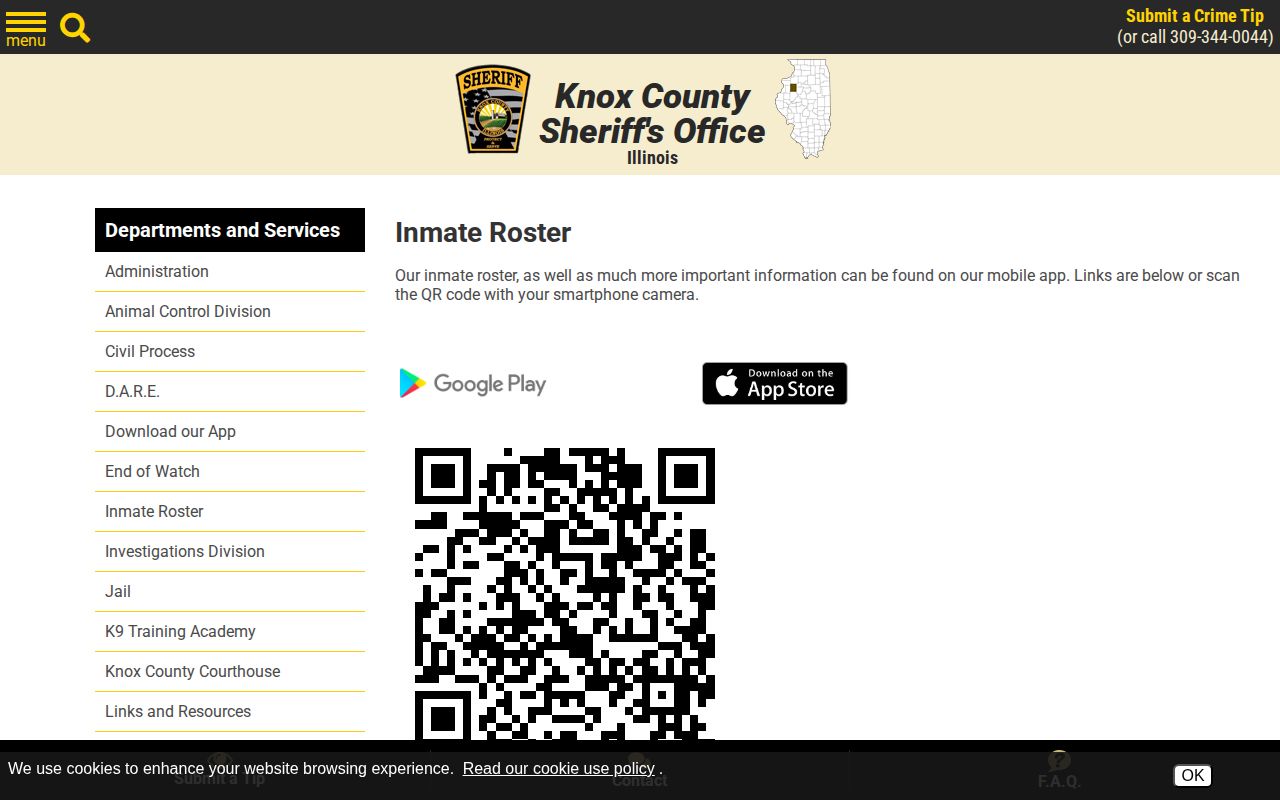
The image does not show released people. A three-day historical result still requires records tied to actual release timestamps.
Verify Knox Release Destinations
Use the court for legal authority and the custodian for physical custody. The Knox Judici portal may show pretrial orders, dismissal, sentence, time served, probation, conditional discharge, or commitment to IDOC. It may not show the minute of the jail-door exit.
- Court-ordered release
- The legal authority, subject to jail processing and other holds.
- Time served
- A sentence outcome that may explain release after processing.
- Mittimus
- A court commitment that can explain movement into IDOC custody.
- Detainer
- Authority or a request that can lead to another custodian.
When IDOC is named, search by name, IDOC number, or birth date and read Admission Date with Offender Status. When USMS or ICE is named, use the corresponding official route. Do not search every system merely because the county record disappeared.
Sealed Knox Release Records
Illinois sealing and expungement can change public access. Expungement and sealing are not the same. Eligibility depends on the actual disposition, offense, sentence, and later history. A blank public docket can also reflect juvenile, impounded, or confidential treatment, so it is not proof that no release occurred.
The Illinois Courts forms and instructions provide the official process. The manifest image below shows that court route in the context of access limits.
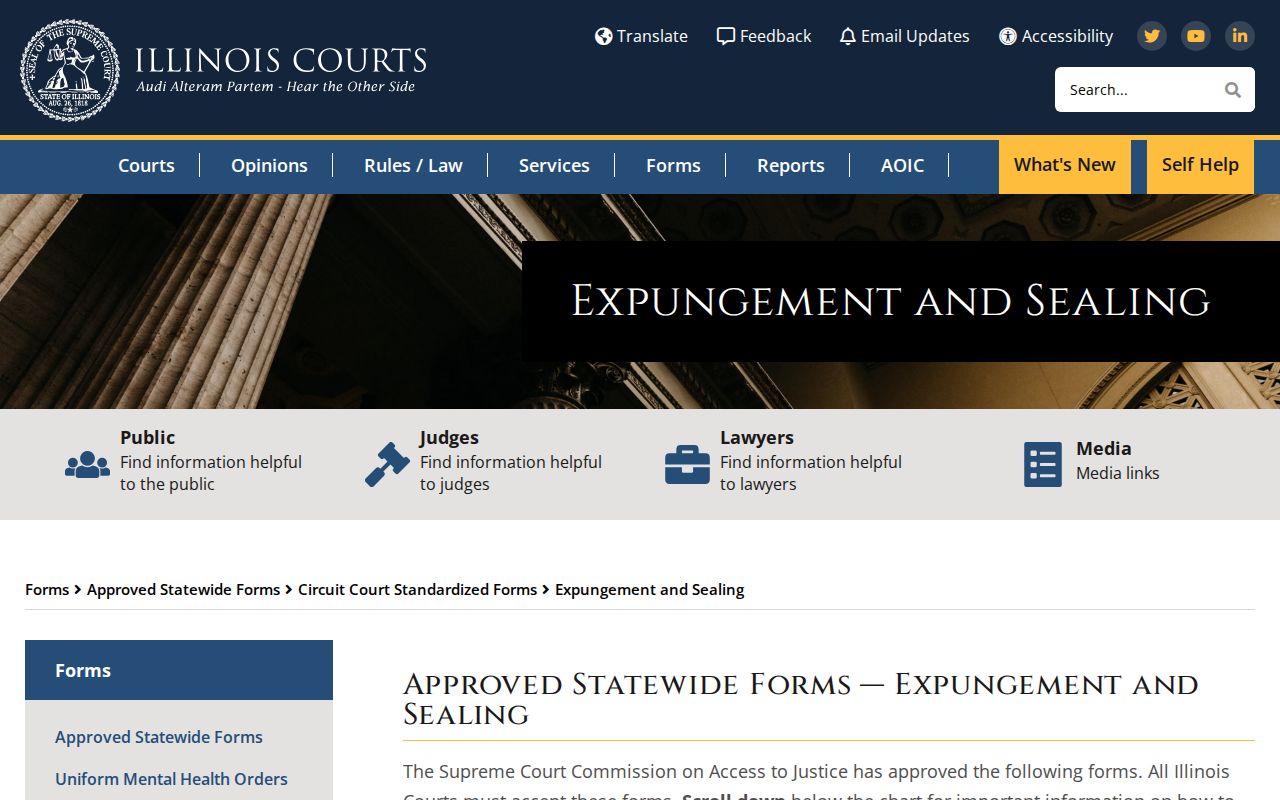
Its role is to explain why an older related record may be unavailable. It does not alter the need to verify an unsealed recent release with the responsible custodian.
Compare Knox Release Windows
The Knox County 24-hour release workflow is best for a tightly defined same-day interval. The three-day method captures a longer period and reduces midnight-boundary errors. Both rely on a sheriff records request because neither official rolling feed exists.
For a named person rather than the full period, check the app, jail, court, VINE, and any documented receiving custodian. State the result narrowly: “no longer returned by the app,” “court ordered release,” or “sheriff ledger records transfer.” Only the last dated custody record confirms the custodian's physical event.
Audit a Knox Three-Day Result
Review the final extract before calling it a 72-hour release list. Every row should have a release timestamp inside the defined interval, not merely a booking or court date. Keep the booking number so two stays by the same person are not merged. If a code is unexplained, request the sheriff's legend rather than assigning a common meaning from another jail system.
Next, sort outcomes by what the record actually says. Court-ordered exit, bond, time served, sentence completion, transfer, warrant, and detainer are not interchangeable. A transfer destination should remain attached to the row. When no destination is given, say only that Knox County custody ended. Do not add an address, transportation detail, supervision status, or return-to-community claim that the record does not support.
Finally, check for timing and identity errors. Compare full names with birth information, booking and case numbers, agency, and event dates. Note when the source was accessed. A roster screenshot saved during custody can help identify the booking, but it cannot establish the later exit. The court provides legal context, while the sheriff provides the physical release record. Any receiving custodian supplies the next link. This audit preserves uncertainty without weakening the useful fact that the county episode ended.
Public Record Search
Sponsored Results